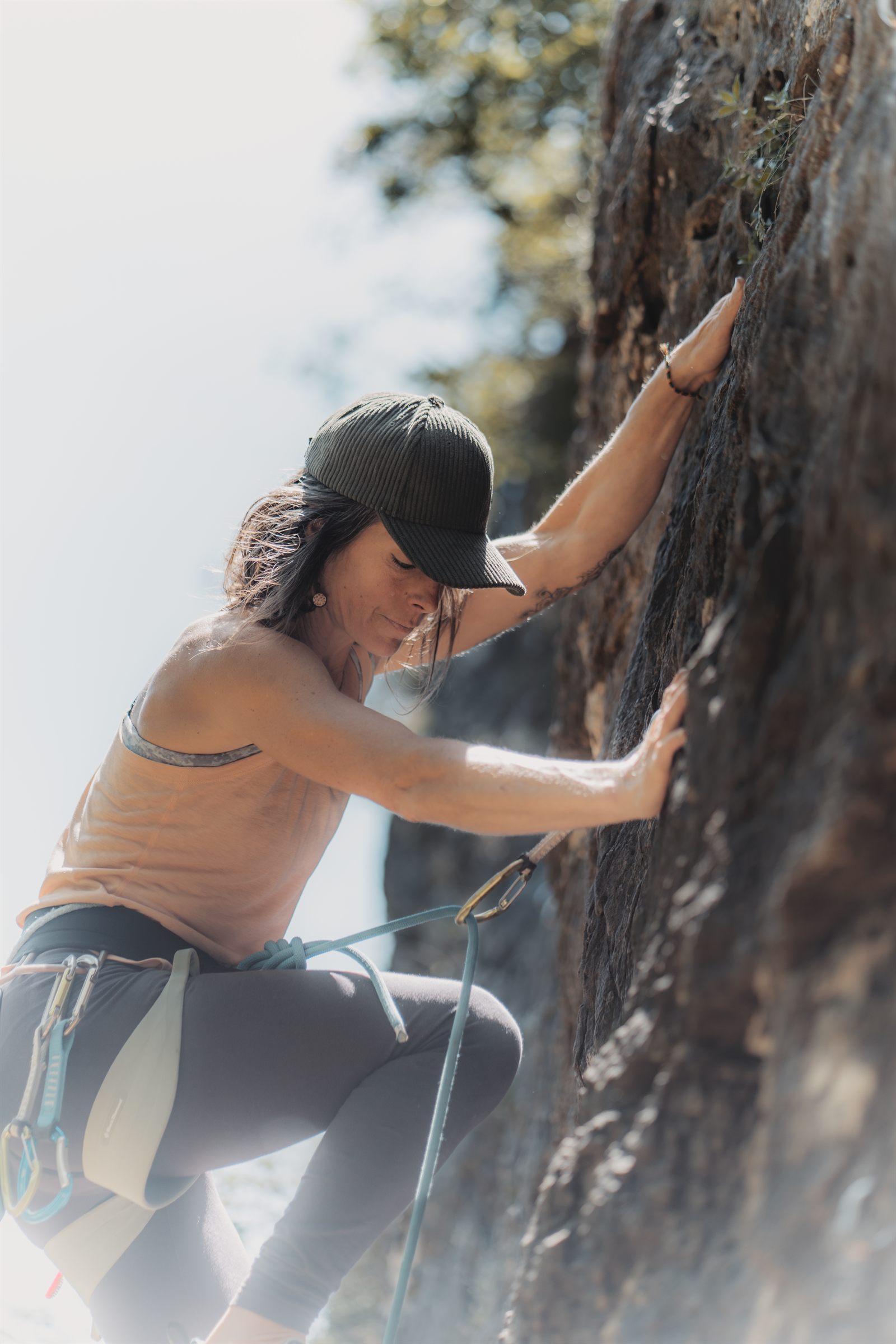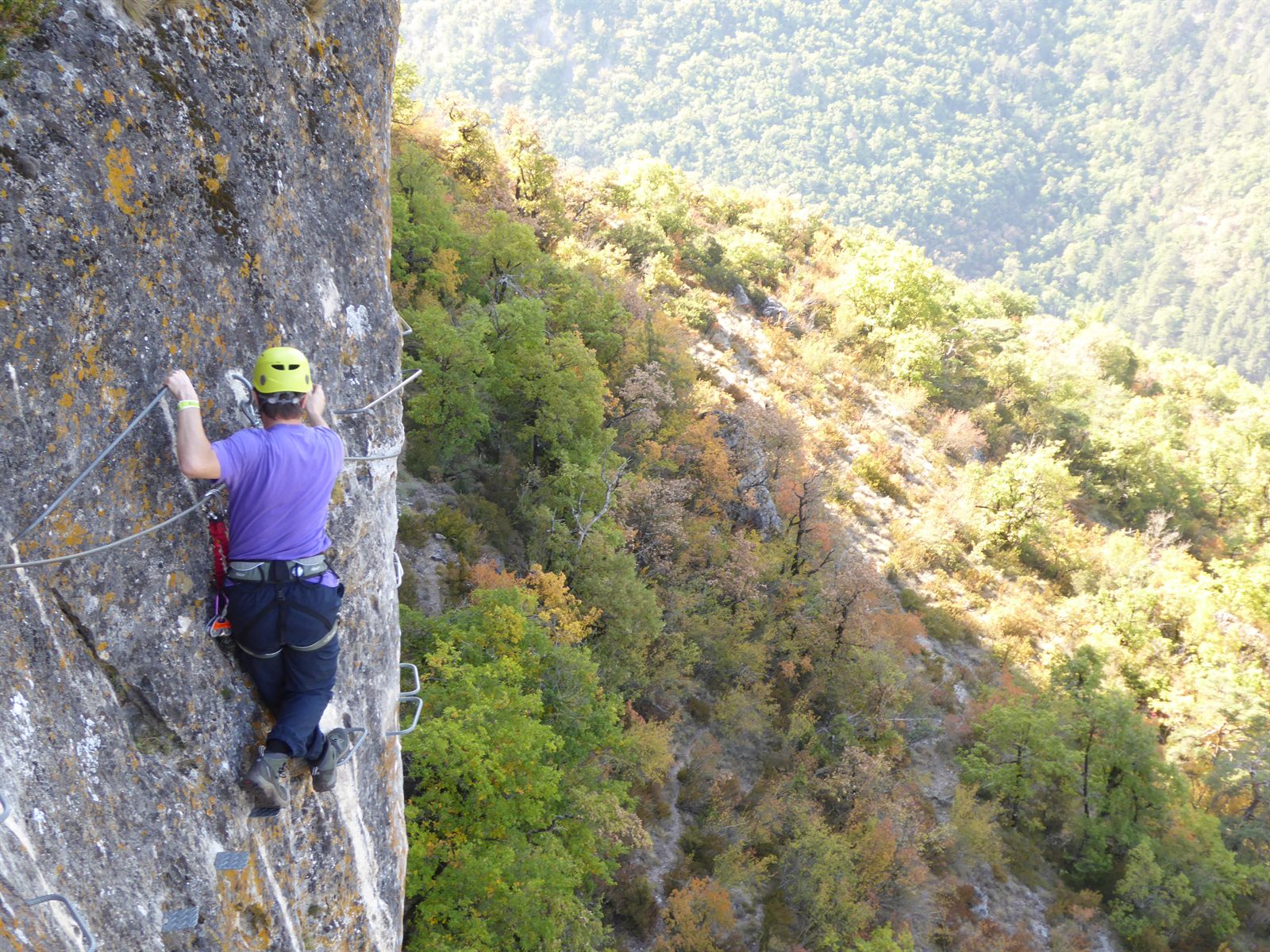
When I am climbing a multi-pitch route on the Jonte, I sometimes pass a griffon vulture at less than ten metres. The most striking thing is the sound: air whistling over its 2.80 m wingspan. Most of the time, they pass in rising circles, riding the thermals up the cliffs. When the sky is clear and the currents settle in, it is a daily spectacle in the Cévennes.
An exemplary reintroduction
The griffon vulture had disappeared from the Grands Causses by the early 20th century, wiped out by poisoning campaigns and the decline of livestock. In 1981, the LPO (French bird protection society) and the Cévennes National Park launched a reintroduction programme. Spanish vultures (from Aragon and Andalusia) were acclimatised in an aviary at Le Truel, then released gradually.
Today, the colony numbers more than 400 breeding pairs. It has become one of the largest in Western Europe. Griffon vultures breed in the cliffs of the Jonte, the Tarn and the Dourbie, and some have settled as far as the Vercors and the south of Aveyron.
How and where to spot them
Three tips, after twenty-two years of watching them:
- Pick the right time: between 10 am and 4 pm, when the thermals are active. Early morning, they are still at the nest or flying low.
- Pick the right spot: the Cinglegros viewpoint (Causse Méjean), the Vase viewpoint (Le Rozier), the Jonte ledge above Saint-Pierre-des-Tripiers.
- Bring binoculars: an 8×32 is enough. Without binoculars you will see them, but you will miss the details (wedge-shaped tail, white ruff, pale legs).
Vultures are the airborne soul of the Causse. As long as they fly, the land is in good health.
What about the other raptors?
You will also see: cinereous vulture (darker body, rarer), Egyptian vulture (smaller, summer only), golden eagle (two or three pairs), peregrine falcon (on the cliffs). The Egyptian vulture is the only migrant of the group, leaving for Africa in September.
How I weave it into my outings
On the via ferrata du Boffi, on the multi-pitch climbs of the gorges: on every outing, I take a moment to tell you about these birds, their biology, their reintroduction. It is not a lecture, it is a conversation. But it is what turns a sporty activity into a real naturalist discovery.
Happy spotting. And if you want to go further, I will point you to the Maison des Vautours at Le Truel, in Saint-Pierre-des-Tripiers, which runs exhibits and dedicated outings.